RTX 3090
Ampere architecture · 24 GB GPU memory

Ideas Become Systems
Strixation
Meaningful computation. Locally available.
Strixation is IIC's operational heterogeneous local compute and research platform. It combines multiple generations of NVIDIA GPU hardware into one locally controlled Linux environment for experimentation, engineering, development, model execution, data processing, and knowledge-oriented workloads.
Compute should amplify the person doing the thinking.
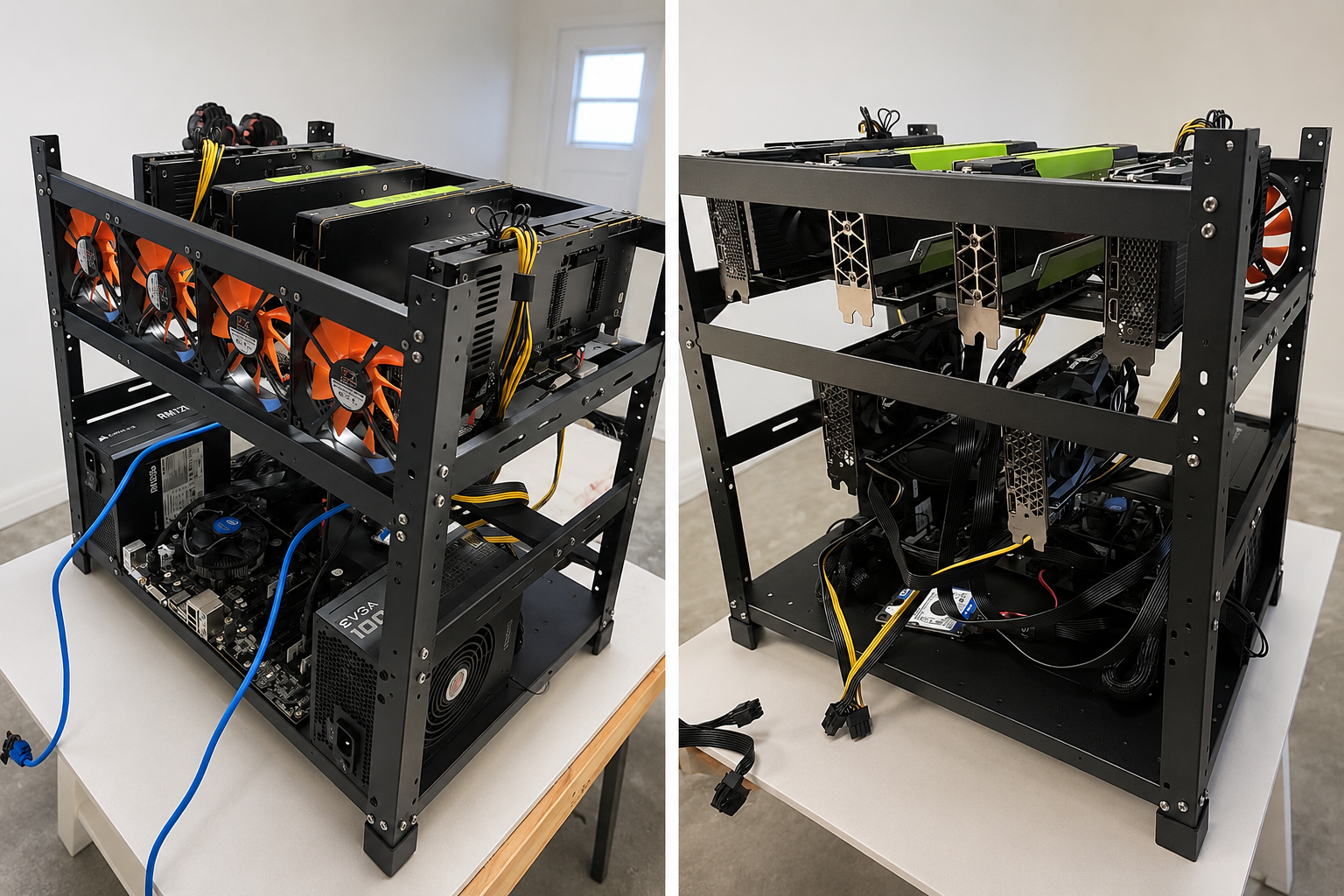
Strixation has moved beyond a planned compute concept. Six heterogeneous NVIDIA GPUs now operate simultaneously under Linux, with deterministic CUDA device mapping and independent CUDA execution verified across every installed compute device.
Ampere architecture · 24 GB GPU memory
Ampere architecture · 10 GB GPU memory
Pascal architecture · 16 GB each
Turing architecture · 6 GB each
Aggregate GPU memory across the current six-device system.
CUDA execution independently verified on all six GPUs.
Strixation deliberately combines three NVIDIA compute generations in one research environment.
The objective is not to make unlike hardware appear identical. It is to understand what each resource can contribute, where its capabilities differ, and how meaningful work can be directed toward appropriate locally available computation.
Strixation is physical IIC infrastructure, assembled and operated locally rather than consumed as an abstract cloud-compute service.
The current platform uses a dedicated high-airflow open-frame chassis, controlled GPU power limits, two PSU power domains, Linux/NVIDIA compute drivers, deterministic device mapping, and remote SSH administration.
Local ownership allows IIC to inspect, modify, test, break, rebuild, and understand the complete compute environment.
Local compute does not eliminate the usefulness of external infrastructure. It provides another resource whose hardware, configuration, evidence, and availability remain directly observable.
Strixation is being developed around a simple question: how can meaningful computational capacity accelerate a person's ability to investigate, learn, test, understand, and create?
IIC uses the term Intelligence Accelerator to describe this direction: locally controlled computation used to extend the scale, speed, depth, and range of work a person can meaningfully perform.
IA does not begin with the assumption that computation should replace the person performing the work. Human intention remains the driver. Computational resources become tools that help people investigate further, test more effectively, examine larger bodies of information, and pursue questions that would otherwise be constrained by available compute.
Strixation provides the physical research environment in which that direction can be developed and tested while keeping the distinction between demonstrated compute capability and developing IA software clear.
Augment. Never replace.
Strixation is not being assembled merely to possess compute power.
It exists so IIC can ask, test, and revisit a broader question:
What can we learn, build, test, and understand when meaningful computational capacity is locally available?
Rūts demonstrates local observation close to real-world activity. Strixation demonstrates substantial locally controlled computation.
Within the developing SPHIROSYSTEM architecture, Strixation represents a physical compute resource that can eventually participate in cross-compute continuity.
The objective is to allow workloads and capabilities to use appropriate available compute without requiring every edge device to independently carry the entire computational burden.
Strixation's six-GPU heterogeneous compute environment is operational today.
Cross-device workload orchestration, automated resource scheduling, IA software, and broader SPHIROSYSTEM compute coordination remain development directions and are not presented as completed capability.
What is real now: six heterogeneous GPUs, three NVIDIA architectures, approximately 78 GB aggregate GPU memory, six independently CUDA-qualified compute devices, remote administration, and local ownership and control.